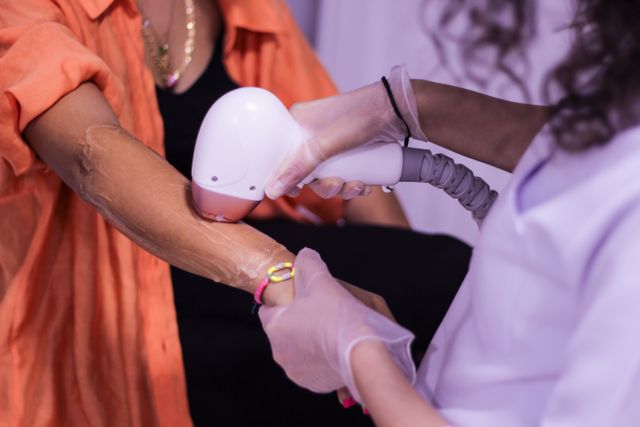
The appeal of laser hair removal is simple: Shaving has to be done every few days, waxing only lasts three to six weeks at most, and neither touches the long-term ability of the follicle to produce hair. Laser treatment does not cut or pull the hair away, but instead delivers concentrated light energy into the melanin within hair follicles. It damages the biological structures that support growth. It is that fundamental difference in mechanism that is driving demand for laser hair removal Sydney clinics and providers across Australia, which continue to grow year on year.
What Does the Clinical Evidence Say About Long-Term Reduction?
The research consistently supports the conclusion that laser hair removal is best described as long-term hair reduction rather than permanent removal. The most recent systematic review of long-term outcomes for various laser technologies showed that average hair reduction varied from 30% to 73.6% for Nd lasers, 35% to 84.3% for Alexandrite lasers, and 32.5% to 69.2% for diode lasers. This is certainly a large reduction in hair, but the ranges are wide. They indicate that outcomes vary greatly between patients, even with the same technology and protocol.
Because hair follicles cycle through growth, transition, and resting phases, and not all follicles are active simultaneously, multiple treatment sessions are necessary. Laser energy only impacts hair in the active growth phase. Providers generally recommend six to eight sessions spaced weeks apart. The goal over those sessions is to catch each follicle in the phase where it responds to treatment. It is far more important to complete the full course of sessions than it is to choose between the options of one versus two or three versus four. Results at session three look different from results at session eight.
Why Does Body Location Change the Outcome?
The 2022 review also demonstrated that body location does make a difference in the efficacy of laser treatment. Areas with longer hair growth cycles, such as the legs, for example, tended to have a higher rate of long-term reduction than facial areas. That finding has a very direct implication for one of the most common requests: facial hair. Facial hair is often influenced by hormonal fluctuations. The biology that resists total destruction is more active on the face than on the body. Patients seeking treatment for facial hair should not expect the same results as from the legs or underarms. Providers should manage patient expectations accordingly.
In early clinical evidence examining multiple laser systems, about 50 per cent hair reduction six months post-treatment was reported. This figure predates the improved performance of newer devices but is a good benchmark for setting expectations. More recent technology has pushed those numbers higher in optimal conditions. Long-term data still show that regrowth is still possible even after a full course of successful treatment. Follicles can partially regrow. Even dormant follicles can become active months or years later in response to hormonal change, aging, pregnancy, or endocrine conditions.
Hair Colour Is A Variable That Most Patients Underestimate
Because laser energy is absorbed by melanin, dark hair responds well to laser treatment. Blond, grey, white, and red hairs, which contain much less pigment, absorb far less energy and therefore have much lower reduction rates. This is one of the most clinically relevant factors in predicting outcomes. It is also one that promotional materials often downplay. A patient with dark hair and light skin, the combination that maximises contrast laser systems target, will get different results than a patient with light hair. This remains true regardless of the number of sessions.
How Does Laser Compare with The Alternatives, And What Does Maintenance Look Like?
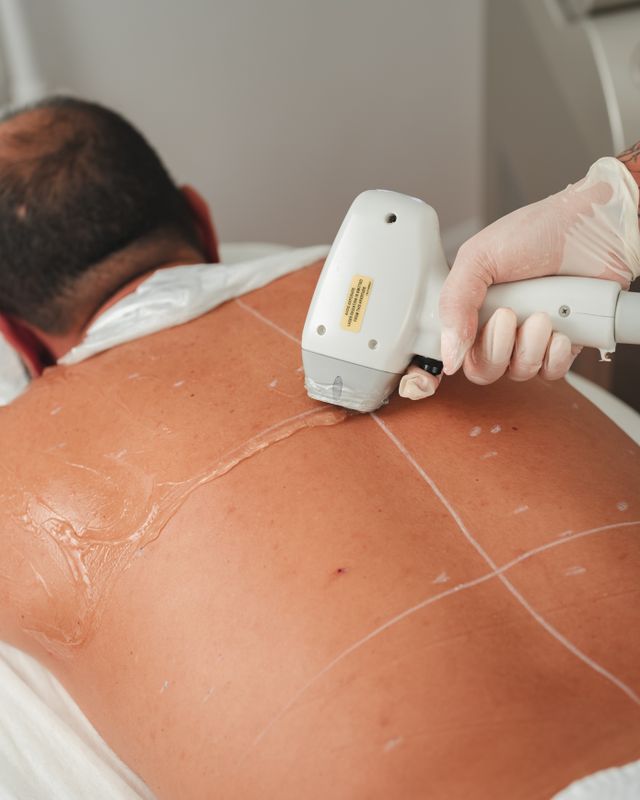
While electrolysis is the only method of hair removal that has been proven to cause permanent destruction of individual follicles, the practical limitation is that it treats only one follicle at a time. This makes it slow and often uncomfortable over large treatment areas. Laser systems can target hundreds of follicles simultaneously. This makes them more practical for areas such as the legs, back, or chest. Electrolysis is the more thorough option, but it takes longer. It is more appropriate for small areas where completeness is more important than speed, e.g., the upper lip, eyebrows, and isolated patches.
Even those who achieve good results from a full laser course require occasional maintenance. Clinical experience and patient outcome data show that touch-up sessions every six to twelve months control residual or newly activated follicles for most people. The expectation from laser hair removal is that more than 50% of the hair will be reduced in density, sometimes by 80% or more. Regrowth is finer, growth cycles are slower, and there is significantly less reliance on shaving or waxing. This is a meaningful outcome.